Hidden Beats

Your Ultimate Source for Music, Entertainment and Community

Spotlight: Gentiane MG and the Art of Listening

Spotlight: Gentiane MG opens a quiet, immersive space where contemporary jazz, classical influence, and deeply human storytelling intersect. With the release of Can You Hear the Birds?, the Montreal-based pianist and composer steps into a chapter defined by lightness, movement, and outward curiosity, while remaining anchored in emotional depth and connection. Rooted in the trust of her longtime trio and an attentiveness to the natural world, Gentiane’s music invites listeners to slow down, lean in, and rediscover the beauty found between sound and silence.

For readers discovering your music for the first time, how did your journey into music and composition begin?

I started playing classical music at five years old. I was very serious about it — concerts, competitions. Id stay home to practice instead of going out or playing with friends. Music quickly became my way of expressing myself and my main hobby outside of school 

We were a family of four kids, and one day my brother started guitar lessons and needed some practice time, which meant I couldnt play piano for half an hour everyday. Later on I found a letter Id written to a family friend (I must have been about eight years oldwhere I said: My brother started playing guitar, and I cant practice all the time anymore. I dont know what Im going to do. I think Im going to have to move. 

Then I entered the conservatory, with harmony and counterpoint classes and strict rules. By that point I was eleven, entering my teenage years. I think maybe it coincided with that age when you start feeling lots of things and need to let them out. As far as I can remember, thats when I started composing little tunes, with no form or anythingbut I remember having a sense of which notes were harmonious together and which werent, without necessarily understanding why yet. Sometimes my conservatory teacher at the time would walk into the room for my lesson and catch me in the middle of my little improvisation sessions, before we had to get serious and play Beethoven sonatas and Bach Fugues. I remember feeling very free and fascinated during those improvised moments. Without knowing it, I was already exploring the building blocks of my musical world of today 

Your work often lives at the intersection of contemporary jazz, classical influence, and storytelling. When did you first become aware that this blend was central to your artistic voice?

Music was always strongly associated with feelings for me, and with images.  

My teacher from Conservatorywith whom I stayed close over the years and who was kind of a mother figure as I grew upreminded me of a concert where I was performing the piano reduction of Petrushka by Stravinsky. I must have been 15. Before I started playing, I turned to the audience and explained, very naively, how Petrushka was a puppet, and that the piece was the story of this character moving awkwardly because they were made of wood. It wasnt really common practice in the classical worldbut I guess for me it was important enough that I had to share it, for the audience to appreciate the piece as much as I did 

Later on, I studied jazz formally. Id say it took me about eight years to feel comfortable enough with this language to the same level as I had been with classical earlierAnd once I reached that goal, I was drawn back to the classical repertoire at the same time I kept digging jazz records.  

think its impossible to think about the piano repertoire in history without thinking about all of it, without limits. I started to just search for the sounds I loved and to think about my language in those terms.  Thatwhen my way of playing became coherent with my way of composing. As if both approaches to language met in the same place and developed together as a whole, hand in hand, in parallel to my development as a human being and my growing interests for literature, sports, and hobbies outside of music.  

Your new album Can You Hear the Birds? feels lighter and more outward-looking while still deeply emotional. What sparked this shift in perspective?

After the last tours for the previous record, and the intense experiences of life on the road, I felt more open to the world around me. For a few months, I tried to keep living life lightly, day to day, experiencing new things, new places, and meeting new people. 

There is something about that kind of connected, careless energy that I wanted to express. When thinking about the music, I wanted to create sounds and images that would provoke those same feelings in the audience: a sense of feeling deeply alive, of freedom, and of thriving. 

At the same time, inner life has many layers. What has always guided my creative voice is digging further inside and really checking in at the core of my being, to capture whats there in the rawest way possible. For me, composing is really about embracing all of those layers at the same time. This record felt like a conscious choice to let those inner layers exist alongside a more open relationship with the world, rather than staying turned inward. 

The title itself is evocative and almost meditative. What does Can You Hear the Birds? mean to you, both musically and personally?

Music is my ground, and on a personal level, Can You Hear the Birds? was my way of letting go of the more somber layers of myself. Its a kind of reminder of what truly matters in life, in the present moment. No matter what, if I can hear the birds singing outside my door, notice the little pigeons hanging out on the street as I walk by, or truly feel the connection with my cat on a day-to-day basis, it means I am in a good place in life. Its also what music is to me — a door to openness and presence. 

Can You Hear the Birds?, in todays difficult world, was also a question I felt compelled and inspired to share, because I believe the world could benefit from hearing those birds too — metaphorically and literally speaking 

This record highlights the connection between inner life, the natural world, and the musicians you play with. How do those relationships shape the way you write and perform?

I try to be as authentic as possible in my writingto let go of any style barriers and go directly to what comes to my ears. I do work on things for a long time, but I try to preserve the first instinctive spirit. Its the only way Ive found to create music that truly touches me, and that I can fully own. 

Growing up close to nature, the natural world is part of my authentic self, so its impossible for me to detach it from my inner imagery. I often have abstract images linked to nature that come to mind when I compose and when I play. Its also a way Ive found to express certain ideas on a more universal level, as there is so much symbolism connected to nature. Sometimes Ill be trying to express an emotion and then consciously search for an image that expresses that emotion, to try to guide the listener towards the intended emotional content of the piece. Music and image combined form a language of their own. .

For this record, I decided to teach the music purely by ear, with no written notation, to the musicians. This shaped the writing process, as I had to come up with singable melodies and very clear harmonies and forms in order for the music to be memorable enough for the musicians to learn it this way. This led to many solfège sessions, workshops, and several very open discussions with Levi and Mark. They were deeply involved in the creative process and shared ideas about arrangements along the way. That process definitely affected the way we play together from the very first time we played. Even when the musicians didnt know the music well yet, they played it with so much soul and feeling that I immediately knew I had made the right decision. This energy has been deeply felt every time weve played this music. It really feels like something we are carrying together. 

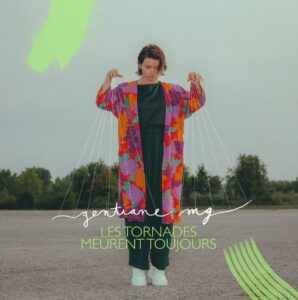
The first single, “Les tornades meurent toujours,” has a strong emotional presence while remaining delicate. How did this piece come together, and why did it feel right as the first introduction to the album?

This piece was one of the first to come together. I wanted to write something with very high energy and a strong melody. For some reason, the image of a tornado quickly came to mind with the first rhythmic cell. Ive dreamed about tornadoes countless times in my life. As a child, they were my biggest phobia, I thought they could happen at any moment, even under a blue sky. 

Tornadoes Always Die in the End” made sense within the whole concept of the album. Tornadoes die, and  then the birds start singing again, and we can thrive again, metaphorically speaking. I really tried to play with the shape of a tornado, using a constant kind of ostinato that eventually resolves, with the drums at the center of the piece to convey the intensity of a tornado. 

I chose to share it first because I think its the most contrasting piece compared to my previous album, and I believe its a strong way to enter this new collection. 

You’ve worked with a long-standing piano trio. How has that continuity influenced the sense of trust and openness heard on this record?

The first musical thought I had, even before I started writing, came while returning from our last European tour for the previous record. I was thinking about some concert highlights — those musical moments you remember your whole life because something special happened on stage. A deeper exchange, a surprising group moment. The music had evolved on stage, and by the end of the touring season, we had reached a point where it had really opened up, and the three of us were feeling free, inspired, and thriving. 

I thought to myself that for the next record, I wanted to capture this feelingto write music that, from the very beginning, led to that kind of energy directly. The music was written with everyones playing in mind, thinking about how to make each of us sound like ourselves through it, to bring out the best in each musician. There is a real intimacy and trust that has built over the years, as if weve developed a common language through playing and spending time together so much. 

Your music invites listeners into a very intimate space. How do you think about the listener’s experience when composing — is it something you consciously consider, or does it emerge naturally?

I do think about the listeners experience. Id say this record is the one I considered it the most from the very beginning. Thats part of why I wanted to share something inspiring and brighta world thats fun to dive into for the listener, one that lets go of heaviness. Often, my work titles can be personal to me at first, and then as the pieces evolves, I link it to images that are more universal, helping the listener enter my world and feel and see something through their own imagination. 

If I try to describe the energy I was intentionally trying to convey with this music, it would be a kind of magican upside-down world, a world within a world. I feel the same way when I look at animals. They have their own world within ours, and that world fascinates me and draws me in. I wish I could let go of my human perspective and completely dive into their worldjust like when I play music and try to forget myself. And I hope the listener can forget about themselves when they come to the show and live something different through the music.  

With the full album arriving later this spring and more singles on the way, how do you feel this project represents where you are right now as an artist?

I am very proud of this project and everything surrounding it. I believe it truly represents where I am right now, and I feel that Ive completed this process. The music is exactly what it wants to be. I think it reflects who I am in every way. I explored a whole new side of creativity while working on all the visuals with Sylvain, my graphic designerwhich is also representative of where I want to go. I want to keep exploring, evolving, and pushing myself out of my comfort zone in every way I can, and to meet new artists along the way. 

I poured every single ounce of myself into this music. I would say its the most unfiltered album Ive made. I really went for bold expression, both in the music and in the imagery. At the same time, it feels good to be sharing it now and letting it meet people where they are.

What is one thing you are most proud of in your career so far?

I guess Im proud of every single choice Ive madefrom boldly moving to Montreal to study jazz at 16, before I even knew what it really was about, to organizing my first concert with my own music in a small bar in Montreal, to releasing my first album independently in 2017 with no idea what I was doing, to slowly growing into the place I am now. Today, I can devote my time to creating the art I want without filters, and I have an audience for it worldwide. I also proudly take an active part in the Canadian music community, playing alongside some amazing, beautiful musicians. 

What is the most interesting thing you’ve learned about yourself through creating and sharing

Ive realized through composing and sharing my music that I have a strong inner world that I can only truly access through art. Its playful, raw, and alive. Its a part of me that Im still discovering outside of music. 

What is one question you think should be asked more in interviews, but isn’t asked often enough?

Good question. I think your questions were really interesting! They made me reflect, and I learned a lot throughout the process. One question I dont get asked often, but that I think would be a good one, is: “Name one piece of art outside of music that had an influence on you and why  

What do you hope people take away from your music?

hope that people dream, thrive, feel fascinated, cry, see images, think about new ideas, get lost in the sound, or simply experience a unique moment outside of their day-to-day that makes them feel alive and curious for more discoveries 

Spotlight: Gentiane MG invites listeners to slow down and truly listen.

Listen right now!

Keep up with everything here